The Desert National Wildlife Refuge contains 1.615 million acres, making it the largest National Wildlife Refuge in the Continental United States. Within the Refuge there are six major mountain ranges that have seven distinct life zones, and elevations ranging from about 2,500 to 10,000 feet. A large part of the Refuge falls within the Nevada Test and Training Range, which also includes Area 51 and the Homey Airport at Groom Lake. The Nevada Test and Training Range is not open to the public.
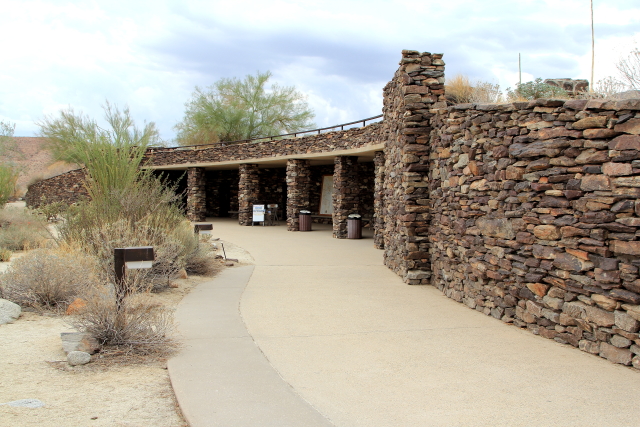
About two years ago the U.S. Fish & Wildlife Service opened a beautiful new visitor center at Corn Creek, which is 23 miles north of Las Vegas on U.S. Highway 95. I have been to Corn Creek a number of times, but all of my trips were before the new visitor center was opened; so, this seemed like a great trip.
Corn Creek is a nationally known birding area and one of the top birding locations in Southern Nevada. There is also a refugium containing endangered Pahrump Poolfish that can be viewed through glass windows.
A number of hiking trails start from the visitor center and wind out through the desert and along Corn Creek. All of the trails are fairly short, so it is possible to hike all of the trails in under an hour. (Add another hour if you want to stop and read all of the information signs along the trails.)


Located along the Birdsong Loop Trail is an unusual wood cabin. The cabin was constructed in the 1920s using railroad ties that were obtained from the abandoned Las Vegas & Tonopah Railroad. Old scars from the railroad spikes are still visible on the ties.

Located off of the Bighorn Loop is a faint out-and-back trail to Whispering Ben. I could not find any published documents about Whispering Ben and there are no information signs at the site.
One of the people that I used to work with is an avid birder and he told me that after moving to Las Vegas he was hiking in the area and found the remains of some type of aircraft that had crashed near Corn Creek. My friend did not say anything about Whispering Ben, and I do not want to start any rumors; however, Area 51 is just up the road and I understand that a number of years ago an old rancher saw military people making plaster prints of some things that they had found in the area. The rancher speculated that Whispering Ben is a cast that the military made and accidentally left it at the site. Who knows?

Back in the days when I was younger and had more energy, we decided to do a backpack trip to Hidden Forest and then climb Hayford Peak (9,912 feet) in the morning.
The trailhead is located 16 miles north of Corn Creek on a washboard dirt trail across the Refuge. We did not leave Las Vegas until after work on a Friday afternoon, but we thought that we had plenty of time because it certainly would not take more than an hour to drive to the trailhead. First Surprise! Once we arrived at the trailhead it was only six miles to the old historic log cabin located in Hidden Forest, so we thought we could make the hike in two hours. Second Surprise! The trail was a lot longer and steeper than we realized. We ended up camping just off of the trail about a mile short of the cabin.
The next morning we were up early and arrived at the old cabin before the sun came over the ridge. We were told that there was a spring a short distance from the cabin and we were able to locate the spring without too much difficulty. (A number of people have told me that they never could find the spring.) Since it was only another 2.5 miles to the top of Hayford Peak, we thought it would probably take about an hour. Third surprise! Well, at least I crossed summiting Hayford Peak off of my Bucket List!